Richmond Palace
The King's CurseRichmond Palace, west of London, is both a royal residence and a measure of how private grief and public power overlap in the novel. Built for Elizabeth of York, it becomes a place of mourning after her death, a setting for royal ceremony and government, and later a residence for Princess Mary as the royal family’s divisions deepen. Its recurring rooms and courtly functions give successive crises a common setting, while the people who occupy it change from one political moment to the next.
Setting and Royal Residence
The palace is introduced as a beautiful residence Henry VII had built for Elizabeth of York. After her death, he goes upriver to Richmond and withdraws into the privy chamber, a room described as being at the heart of the palace. His seclusion makes the building more than a royal possession: it becomes the setting in which he confronts the political and personal meaning of her absence. He had insisted that she had not brought him England and that he had secured it for himself; without her, he is forced to consider what support and security he possesses among her people.
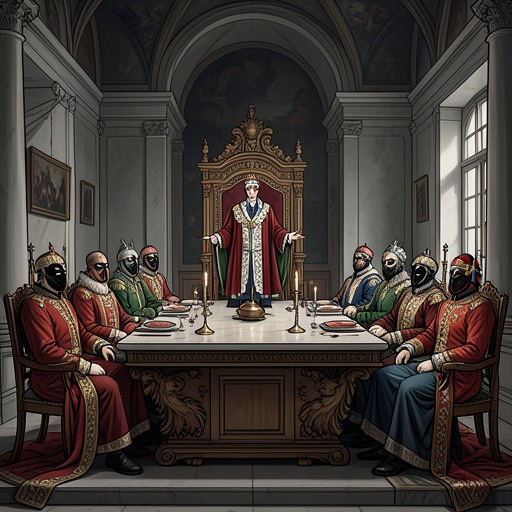
The palace’s domestic and formal spaces are both visible. In the great dining hall, Margaret Pole and Richard Pole are seated among the knights and their ladies when the king reappears after a long period of mourning. He crosses the length of the room and leads Margaret away from the ladies’ table to an alcove. The movement from public assembly to a more secluded corner gives the palace a double character: it accommodates the visible rituals of court, but also the private exchanges that take place within them.
The narrative repeatedly identifies Richmond as a setting through dated chapter headings, including spring 1510, January 1511, autumn 1528, spring 1529, summer 1530, summer 1531, May 1532, summer 1532, and summer 1533. These returns do not describe a continuous life at the palace; instead, they establish it as one of the novel’s recurring royal locations. The same residence can frame the aftermath of childbirth, a ceremonial celebration, an epidemic, a political disclosure, or the enforced separation of a royal daughter from her mother.
Mourning, Birth, and Dynastic Expectation
After Elizabeth of York’s death, Henry VII remains withdrawn until the middle of spring and continues to wear black. His mother, Margaret Beaufort, directs him to end his isolation and helps nurse him back to health. The return to the great hall marks a change from solitary mourning to renewed public presence, though the king’s reappearance does not erase the insecurity that his bereavement has exposed.
In spring 1510, Richmond is the setting for Katherine of Aragon’s loss of a baby and the distressing confusion that follows. A physician tells her that she has miscarried but also assures the king that she is carrying twins and that another healthy child remains. The false reassurance briefly sustains the expectation of a living Tudor heir. The episode places the queen’s physical experience within the wider dynastic pressure surrounding the royal household: what is believed about a pregnancy immediately affects the hopes attached to the succession.
In January 1511, the king has returned from a pilgrimage to Walsingham and summons Margaret to the jousting arena. Her son Arthur tells her to slip quietly away from the queen’s rooms so that she can watch practice for a joust celebrating the birth of the prince. The secrecy of her departure contrasts with the public character of the intended celebration. The palace’s ceremonial life is therefore tied to the birth of an heir, and courtly spectacle gives visible form to hopes concentrated on the royal child.
Elsewhere in the Richmond sequence, a nurse discovers that an infant in a golden-enamelled cradle has died. The child had been in a room beside the queen’s bedroom, under the care of a nursemaid who had taken the quiet for sleep. The discovery abruptly turns the household’s expectation of life into grief. The narration connects the loss to the continuing vulnerability of the royal line, making an intimate death reverberate beyond the rooms where it occurs.
Court, Government, and Epidemic
During the sweating sickness, Richmond becomes a place of retreat as well as administration. Reports of the disease describe its speed and unpredictability; even Cardinal Wolsey contracts it, though he survives. Henry VIII is determined to avoid exposure and limits his contact with the outside world. The palace’s separation from ordinary public life becomes part of the court’s response to a disease that makes even a healthy person’s prospects uncertain.
The king will not receive letters from the City. Wolsey writes to him on special paper from Richmond Palace and lives there while exercising a striking share of royal government. In the royal presence chamber, seated on a throne, he hears petitions from across the country and decides them in the king’s presence. The chamber thus functions not only as part of a royal residence but as a seat of decision-making. Margaret urges the king to return to Westminster and reopen the court for Easter, but Wolsey opposes her proposal, and the king follows the cardinal’s counsel. The palace shelters the king while also concentrating authority in the hands of the minister who controls access and advises him.
Richmond’s political significance is not confined to the epidemic. In May 1532, news delivered there marks a major change in the relationship between the Crown and the Church. The clergy have surrendered to the king; he is to rule the Church in England himself, while the Pope is to be treated as no more than the Bishop of Rome. The same account reports that Thomas More has returned the seal of Lord Chancellor, resigned, and gone home. Richmond is the setting for the communication of a settlement whose consequences reach far beyond the palace: royal authority is being asserted over the Church, and More’s departure makes the cost of that change personal and immediate.
Princess Mary and the Changing Household
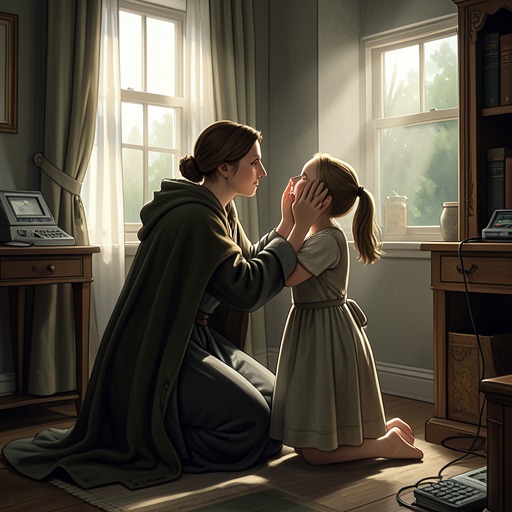
By summer 1530, Margaret Pole is staying with Princess Mary at Richmond Palace. Mary hopes to be allowed to join her mother, Katherine of Aragon. She writes carefully affectionate letters to her father, Henry VIII, but receives only occasional replies, and those are scrawled. The palace offers a place to live within the royal world, but it does not reunite Mary with her mother or restore the intimacy she seeks with her father. Its courtly setting makes separation part of daily life rather than a distant political abstraction.
The contrast with the earlier Richmond scenes is sharp. The palace once held the grief of a king mourning his queen and the hopes attached to the birth of royal children; now it houses a daughter waiting for permission to see her mother and trying to maintain a connection with her father through letters. Across these episodes, Richmond remains a center of royal presence, but presence does not guarantee security, influence, or family closeness. Its rooms and ceremonies frame successive reversals: mourning gives way to renewed court life, the celebration of an heir is shadowed by infant death, refuge from disease enables government by a powerful minister, and royal residence becomes the setting for a family’s separation.